
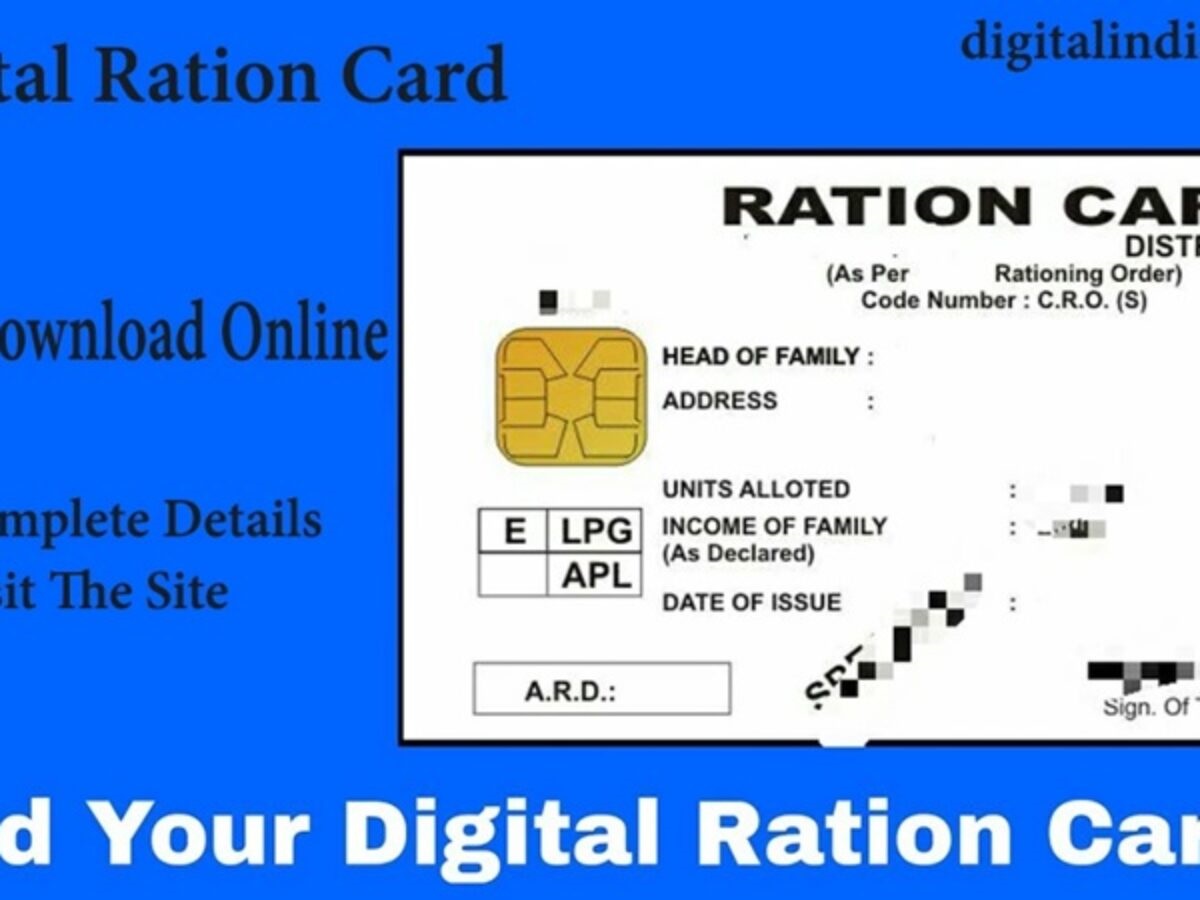
A government-issued ration card is designed to assist individuals with limited income in acquiring essential items at discounted rates. This card serves a dual purpose as both an identification and residence proof. Furthermore, it streamlines the process of obtaining certificates or a voter ID. Ration cards play a crucial role in ensuring food security, and with the advent of the digital era, governments now provide the convenience of downloading and printing e-ration cards online. Dive into this blog to gain insights into the concept of e-ration cards and learn about the online process for downloading them.
In this blog, we will explore the reasons and methods by which ration cards offer utility, highlighting their crucial role as a safety net for society and a fundamental means of accessing various government services.
What is a Ration Card?
A ration card is a government-issued document that grants individuals or families the ability to purchase essential commodities such as food grains and kerosene at subsidized rates from approved government stores.
Functioning as a crucial tool in addressing food scarcity, ration cards play a pivotal role in guaranteeing access to affordable food for every citizen. Their primary objective is to establish a social safety net, curbing hoarding, and preventing price manipulation of essential goods.
Typically assigned to low-income families, ration cards come in various categories determined by economic criteria. Beyond enabling access to subsidized essentials, these cards also serve to identify eligible beneficiaries for a range of government welfare schemes.
History of Ration Cards in India
The history of ration cards in India holds significance in the socioeconomic development of the country. The origins of rationing in India date back to the early 1940s, specifically during World War II, when the British colonial government introduced the rationing system. This system aimed to ensure a fair distribution of crucial commodities such as food grains, sugar, and kerosene, which were in high demand due to the wartime requirements.
Following India’s independence in 1947, the rationing system persisted as a strategy to address food shortages and maintain an equitable distribution of food among the population. Over the years, the ration card system underwent changes and adaptations to meet the evolving needs and challenges of the nation. Here’s a brief overview of key milestones in the history of ration cards in India:
- Introduction of Rationing Boards: Rationing Boards were instituted by the government in different states to efficiently supervise and manage the distribution of essential commodities. These boards played a crucial role in the issuance of ration cards to households that met the eligibility criteria.
- Three Categories of Ration Cards: As the ration card system evolved, it underwent categorization into three primary types: Above Poverty Line (APL), Below Poverty Line (BPL), and Antyodaya Anna Yojana (AAY) cards. Each category was instrumental in defining the entitlements and benefits that a household could avail based on its economic status.
- Computerization and Modernization: During the 1990s and 2000s, there was a notable emphasis on the computerization and modernization of the ration card system. This initiative aimed to diminish instances of fraud, enhance transparency, and streamline the overall distribution process.
- Targeted Public Distribution System (TPDS): The Targeted Public Distribution System (TPDS) was introduced in 1997 with the objective of more accurately directing food subsidies to those who required them the most. This system aimed to minimize leakages and enhance the overall effectiveness of the rationing system.
- Digitalization and Portability: The digitization of ration cards and the introduction of the ‘One Nation, One Ration Card’ scheme were efforts aimed at providing enhanced mobility to beneficiaries. This initiative allows individuals to access their entitled food rations from any part of the country, facilitating greater convenience and flexibility in availing essential provisions.
- Aadhaar Integration: In recent years, the Indian government implemented the integration of the Aadhaar system, a biometric identification system, with ration cards. This initiative was undertaken to bolster transparency and eliminate the existence of duplicate or counterfeit cards in the rationing system.
Throughout its history, the ration card system in India has been instrumental in safeguarding food security for millions of households, particularly those facing vulnerable economic conditions. Despite encountering challenges and undergoing improvements over time, the system remains a vital tool in the country’s ongoing endeavors to combat poverty and hunger.
Types of Ration Card
In India, ration cards are categorized into several types, each serving a specific purpose. The main categories are –
- White Ration Card: This card is accessible to individuals whose income places them above the poverty line. The “white” classification indicates that the cardholder is an Indian citizen with an income surpassing the poverty threshold.
- Blue/Red/Green/Yellow Ration Card: These types of ration cards are issued to individuals falling below the poverty line. They play a crucial role in granting economically disadvantaged individuals access to essential food items at reduced and subsidized prices.
Benefits of having a Ration Card in India:
Owning a ration card in India comes with a multitude of benefits for the cardholder, which encompass:
- Food Security: Ration cards ensure that families with low incomes can consistently afford essential food items such as rice, wheat, sugar, and cooking oil.
- Lower Prices: Ration cardholders enjoy the benefit of purchasing these essential food items at more affordable rates compared to regular stores.
- Identification and Address Proof: Ration cards serve as proof of identity and address, facilitating access to various government services and programs.
- Access to Help: Possessing a ration card makes individuals eligible for diverse support programs, including scholarships, housing assistance, and job opportunities.
- Convenient LPG Access: Certain types of ration cards provide access to subsidized cooking gas (LPG) connections, offering economic relief for household cooking needs.
- Support for Marginalized Groups: Ration cards play a crucial role in identifying and assisting marginalized individuals, ensuring they receive the necessary support to participate in social welfare programs.
List of Official Department of Food, Supplies, and Consumer Affairs (State-wise PDS websites)
Ration cards in India are distributed and regulated by state governments, and the Public Distribution System (PDS) is responsible for overseeing the distribution of subsidized goods through a network of Fair Price Shops. To explore and check the available services, you can visit the official state-wise PDS websites listed below:
| State/Union Territory | URL of Official Portal |
| Andaman and Nicobar Islands | https://dcsca.andaman.gov.in |
| Andhra Pradesh | https://ap.meeseva.gov.in |
| Arunachal Pradesh | http://www.arunfcs.gov.in |
| Bihar | http://sfc.bihar.gov.in |
| Chhattisgarh | https://khadya.cg.nic.in |
| Dadra and Nagar Haveli | http://epds.nic.in |
| Delhi | https://edistrict.delhigovt.nic.in |
| Gujarat | https://www.digitalgujarat.gov.in |
| Haryana | http://saralharyana.gov.in |
| Himachal Pradesh | http://admis.hp.nic.in |
| Jammu and Kashmir | http://jkfcsca.gov.in |
| Jharkhand | https://pds.jharkhand.gov.in |
| Karnataka | https://ahara.kar.nic.in |
| Kerala | http://ecitizen.civilsupplieskerala.gov.in |
| Maharashtra | https://rcms.mahafood.gov.in |
| Mizoram | https://fcsca.mizoram.gov.in |
| Odisha | http://www.foododisha.in |
| Punjab | http://punjab.gov.in |
| Telangana | https://epds.telangana.gov.in |
| Tripura | https://fcatripura.gov.in |
| Uttar Pradesh | https://fcs.up.gov.in |
| West Bengal | https://wbpds.gov.in |
| Daman and Diu | https://nfsa.gov.in/State/DD |
| Puducherry | https://pdsswo.py.gov.in/onlineservices/View_Card_Details.aspx |
Eligibility for ration card:
To apply for a ration card, you must meet specific eligibility requirements:
- No one else has submitted an application for a ration card in your name.
- No other member of your family has already applied for a ration card.
- You must be an Indian citizen.
Frequently Asked Questions (FAQs)
Q: How do I apply for a ration card in India?
The process may vary by state, but generally, you need to visit the local ration card office, fill out the application form, provide necessary documents, and follow the prescribed procedure.
Q: Can I transfer my ration card from one state to another?
Yes, you can apply for a transfer of your ration card when you move to a different state. In this process, you have to submit an application for your transfer request along with the other required documents.
Q: What documents are required to obtain a ration card?
Commonly required documents include proof of residence, family income certificate, and identity proof. Specific requirements may vary by state.
Q: Who can get a White Ration Card?
In India, individuals with an annual income of less than Rs. 11,000 are eligible to receive white ration cards, also known as D cards. Additionally, families with an annual income exceeding Rs. 1 lakh can also be issued these cards.
Q: How can I check the status of my ration card application?
Most states offer online facilities to check the status of your ration card application. You can do this by visiting the official Public Distribution System (PDS) website of your state.
Conclusions:
Ration cards in India play a pivotal role in upholding food security and supplying essential commodities to the nation’s diverse population. With a rich history, these cards serve as a lifeline for millions of families residing below the poverty line. By gaining insights into the various types of ration cards, understanding their benefits, and knowing where to access information, individuals can navigate this crucial aspect of India’s social welfare system more effectively.
Also read,
Difference in Repo & Reverse Repo Rates: Impact on Personal Loans
Get Instant Personal Loan in Minutes with PayMe – Guide to Apply it Online